Ceremonial Uses of the Golden Gate
The Golden Gate (Porta Aurea) of Constantinople was not just a part of the city’s strong fortifications—it also served as the main ceremonial entrance...
The Gate of Charisius and Its Historical Significance
The Gate of Charisius, located near Edirne Kapoussi, has several important historical connections and landmarks linked to it. One notable fact is that the...
Edirne Kapı
The Gate of Charisius
The gate known today as Edirne Kapı, located between the eighth and ninth towers north of the Fifth Military Gate, was...
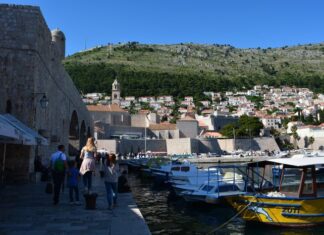
The Fifth Military Gate
Gate of the Pempton
The gate located between the second and third towers north of the Lycus River, or between the thirteenth and fourteenth towers...

The Bazaars of Stamboul A Truly Turkish Experience
One of the most fascinating places in Constantinople (now Istanbul) is the bazaars of Stamboul, the old city. These marketplaces are uniquely Turkish and...

The Guilds of Constantinople A Living Tradition
In Constantinople (now Istanbul), many tradesmen and craftsmen still belong to traditional guilds. These guilds were once common all over Europe but disappeared in...
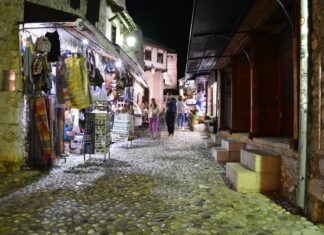
The Historic Khans of Constantinople
In old Constantinople (now Istanbul), there were around 180 khans — large, stone buildings designed to house traveling merchants. These structures are usually two...
A Middle Byzantine Cistern Near Yavuz Sultan Selim Mosque
There is a Middle Byzantine cistern located to the northwest of the outer courtyard of the Yavuz Sultan Selim Mosque that draws special attention....
Cistern Near the Pantokrator Church
Cistern is located on Ibadethane Sokak, to the southwest of the Pantokrator Church in Istanbul. This cistern is a remarkable example of how Byzantine...
Monolithic Columns in Byzantine Cisterns
Reused Materials in Cistern Construction
In the cisterns of Byzantine Constantinople, one of the most important architectural features was the monolithic column. These columns, often...